Explore Our FAQ Section
Explore our lab grown diamond collection with confidence. Learn about custom designs, certifications, ethical sourcing, pricing, resizing, and care tips. We ensure secure payments, fast delivery, and worldwide shipping. Our experts guide you from consultation to final creation, making your jewelry experience seamless, transparent, and unforgettable.
Lab grown diamonds are diamonds that have been created in a laboratory using advanced technological processes that mimic the conditionsrequired for natural diamond formation. The diamonds created in this way have exactly the same chemical and physical properties as natural diamonds.
Lab grown diamonds are produced in highly controlled environments that eplicate the conditions which create natural diamonds. There are two methods used to create lab diamonds; CVD (Chemical Vapour Deposition) and HPHT (High Pressure High Temperature). Both methods are effective in creating high- uality, authentic diamonds, identical to those that have been traditionally mined.
Yes. Lab grown diamonds look and shine exactly like natural diamonds, including their ability to reflect light and sparkle! The shine and brilliance of a diamond are determined by the four Cs, cut, colour, clarity, and carat, all elements that apply to both lab grown and natural diamonds. This means that lab grown diamonds can be made inall of the same colour and look combinations as their natural counterparts. In fact, if you were to put one lab grown and one natural stone of the samespecification next to each other, it would be impossible to tell the difference between them without specialist equipment.
Yes! As lab grown diamonds have the same chemical structure as natural, mined diamonds (carbon), lab grown diamonds are real diamonds and so will pass a diamond tester.
Yes. Lab grown diamonds are made of carbon in a crystalline form, however instead of developing in a natural geological setting over thousands of years, they are made in a matter of weeks through controlled technological processes in a laboratory.
No, you can only tell the difference between lab grown and natural diamonds by viewing the laser inscription on the girdle using a magnifying glass loupe. Although not all diamonds come with this, which is why it is important to choose a diamond from a trusted and experienced jeweller, as it will come with an IGI or GIA certificate. The only other way to tell the difference between lab grown and natural diamonds is by using specialist gemological equipment.
The time it takes to produce a lab grown diamond can vary depending on the size and quality of stone desired. Typically, it takes from two to four weeks for a lab grown diamond to form. After the initial growth process of the rough diamond, it must then be cut and polished. The timeline for this can vary depending on its size and complexity.
The physical and chemical properties of lab grown diamonds are identical to that of natural diamonds, making them every bit as strong. They may even be stronger, as they are not subject to the same natural flaws that can weaken the integrity of natural diamonds.
Lab grown diamonds can be subjected to much the same pressures as their traditional counterparts and are extremely resistant to damage. Natural and lab grown diamonds both sit at 10 on the Mohs hardness scale, which means they are the toughest mineral in the world. In fact, they are so durable that they can only be scratched by another diamond.
If your partner wears other rings on a different finger this can help us to estimate the finger size required.
1. The Paper or String Method (Most Common)
This is the easiest way to measure if you don't have a professional tool.
Step 1: Cut a thin strip of paper or a piece of non-stretchy string.
Step 2: Wrap it around the base of the finger you intend to wear the ring on.
Step 3: Mark the exact point where the paper or string overlaps to form a complete circle.
Step 4: Lay the paper or string flat against a ruler and measure the length from the start to your mark in millimeters .
Also
you can check some youtube videos, its really helpfull.
For in stock products that require sizing, orders are usually dispatched within 3 working days.
Items which are made to order are around 4-6 weeks
Choosing between white gold and platinum depends on your budget, personal style, and potentially allergies. White both metals are white, platinum has a more muted tone compared to the brighter colour of white gold.
White gold is generally less expensive than platinum depending on the purity of the gold. It is a softer metal and is mixed with other alloys. However it requires occasional maintenance in the form of rhodium plating approximately every 18 months to maintain its shine. White gold can also contain nickel, which is commonly used in its alloys. If you have a nickel allergy then we would recommend platinum, which is hypoallergenic.
Platinum is a more durable metal and is therefore less likely to scratch or lose its shine over time. It is a dense, heavy, and hard metal, meaning that it can be polished time and time again, and does not require any special maintenance
Yes, as long as the order for both rings is placed at the same time they will be delivered together.
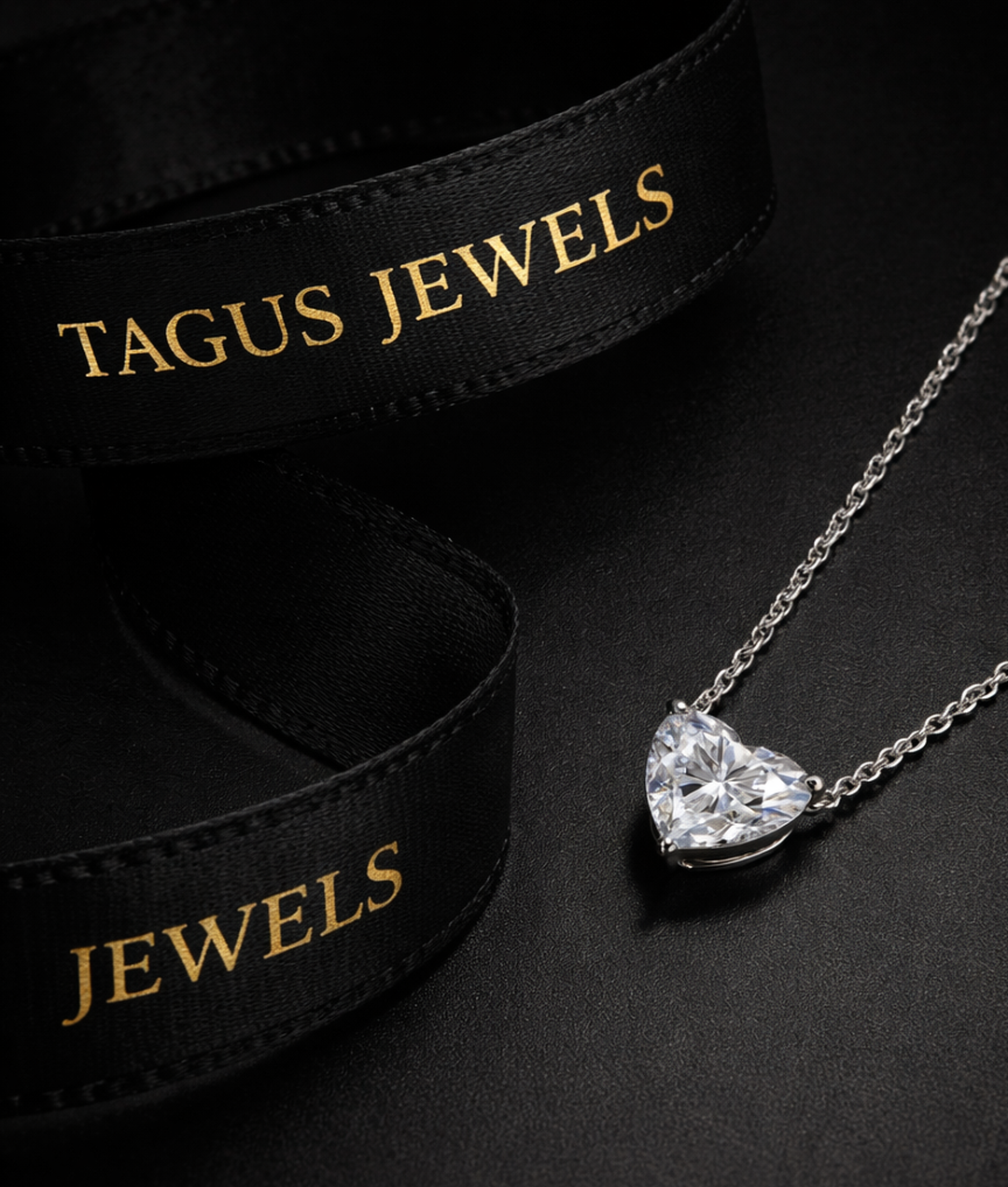
Let’s Connect And Shine
“At Tagus Jewels, every connection matters. Whether you have a question, a custom design idea, or need expert guidance, our team is here to help. Reach out to us for personalized support, honest advice, and a seamless jewelry experience—crafted with care, trust, and timeless elegance.”